
Medieval Cures Worse Than the Illness: From Bloodletting to Powdered Mummies
- Oct 8, 2025
- 5 min read

To live in medieval Europe was to live in the shadow of disease. From the plague that swept across continents to the fevers, wounds, and infections that stalked every village, illness was an inescapable part of life. But what frightened people even more than the diseases themselves were the “cures.” In an age before modern science, medicine was shaped by a mix of ancient philosophy, superstition, and trial-and-error practices. Some of these remedies were harmless rituals meant to comfort. Others, however, were deadly. In many cases, the treatments that promised relief ended up causing more pain than the illness they were meant to cure.
The Logic Behind Medieval Medicine
The foundation of medieval healing came from the ancient world, particularly the theories of Galen and Hippocrates. Health, they believed, depended on the balance of four bodily humors: blood, phlegm, black bile, and yellow bile. If someone fell sick, it was assumed that one humor had become excessive. The solution, therefore, was to restore balance—by draining, purging, or poisoning the body until the perceived harmony returned.
This theory, though logical to the medieval mind, gave birth to treatments that could be as dangerous as the disease. Bleeding a patient until they were faint, forcing them to vomit, or feeding them concoctions laced with mercury or arsenic were all part of a physician’s repertoire. When combined with prayers, charms, and relics, medicine became as much a spiritual exercise as a physical one, often leaving the patient weaker and closer to death.
Bloodletting: The Favorite “Cure”
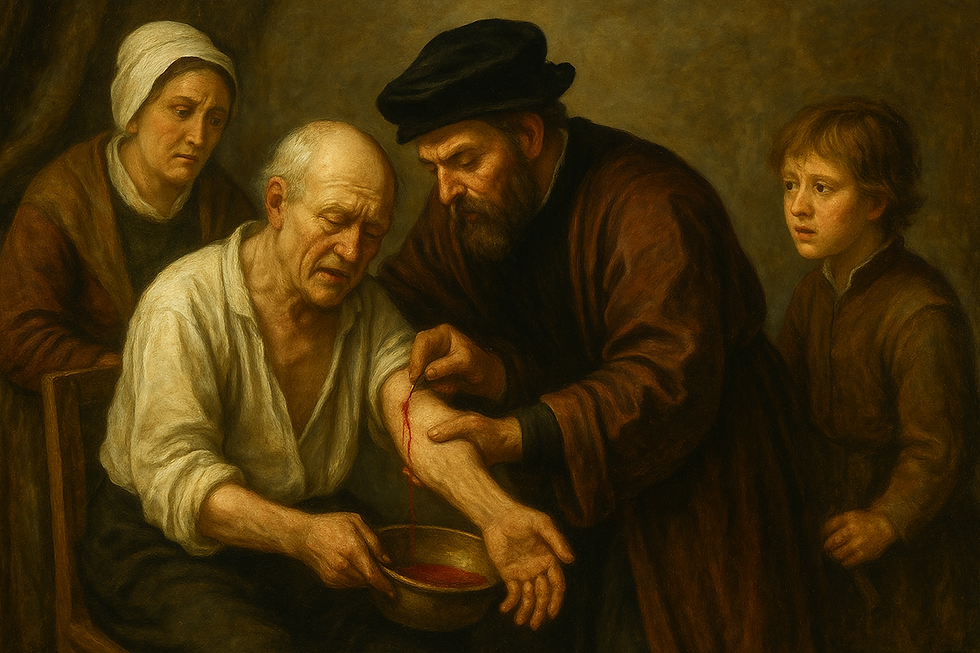
No practice defined medieval medicine more than bloodletting. The idea was simple: if illness came from excess blood, the cure was to remove it. Patients were cut open with lancets, leeches were placed on the skin, or cupping vessels were applied to draw blood out. From kings to peasants, nearly everyone at some point submitted to this ritual.
The results were rarely beneficial. A patient weakened by fever or infection often became weaker still after losing blood. In cases of plague or smallpox, bloodletting did nothing to stop the spread of disease, but physicians persisted, believing that if the patient died, it was the will of God or the lateness of treatment—not the cure itself. The practice endured for centuries, long enough to claim countless victims, and it is often remembered today as one of the most misguided medical traditions in history.
Mummy Powder: Consuming the Dead
As shocking as it sounds, one of the most popular remedies of the late medieval and early modern period involved eating the dead. Apothecaries sold “mumia,” a powdered substance made from ground-up mummified remains, which people believed carried healing powers. Sometimes this powder came from genuine Egyptian mummies, imported at great expense, while other times it was made from dried corpses of executed criminals.
Patients were instructed to consume the powder mixed with wine or apply it directly to wounds. It was thought to cure epilepsy, bleeding, and even plague. In reality, it did little more than introduce harmful bacteria into the body. Yet for centuries, kings and nobles paid fortunes for this grim medicine, convinced that the preserved flesh of the dead could give life back to the living.
Mercury, Arsenic, and Poison as Medicine

In the medieval apothecary, substances we now consider deadly poisons were often found on the shelves. Mercury, bright and shining, fascinated physicians who believed it had purifying powers. It was used in ointments for skin diseases and even prescribed for syphilis in later centuries. Patients endured horrific side effects, from trembling hands to organ failure, without realizing that the cure was killing them.
Arsenic, too, found its way into treatments. It was used in small doses to treat fevers or mixed with herbs as a tonic. Though some patients may have felt temporary relief, the long-term effects were devastating. Medieval people, lacking knowledge of toxicity, accepted the pain and sickness that followed as a necessary part of healing.
Trepanning and Surgery Without Anesthesia
When diseases affected the mind or head, physicians sometimes turned to trepanning—the practice of drilling a hole in the skull. The purpose was to release “bad spirits” or rebalance the humors. Patients with migraines, seizures, or mental illness might find themselves on a surgeon’s table, enduring unimaginable agony as their skull was cut open without anesthesia.
Surgery in general was brutal. Amputations were carried out with saws and knives, and cauterization with hot irons was used to stop bleeding. Many did not survive the procedures, and those who did faced infection that could kill days later. Yet to medieval minds, enduring the pain was proof of courage, and survival was credited to divine intervention.
The Plague and Its Cures

When the Black Death struck in the 14th century, killing millions, people turned to desperate measures. Physicians carried “plague masks” stuffed with herbs and spices, believing the scent would purify the air. Patients were advised to avoid bathing, as water was thought to open the pores to disease. Some treatments involved rubbing onions, arsenic, or crushed emeralds into the skin. Others recommended holding live chickens against buboes to “draw out” the poison.
None of these cures worked, of course. If anything, they worsened the suffering. But in a world where death was everywhere, people clung to any hope, no matter how irrational, that might spare them or their families.
Faith, Magic, and Healing Charms
Medicine in the Middle Ages was never just physical. Healing often required the blessing of priests, the use of holy relics, or the chanting of prayers. People carried charms inscribed with magical words or wore amulets filled with herbs to ward off sickness. Some remedies involved astrology, prescribing treatments based on the alignment of the stars. Others drew from folk magic, instructing patients to bury toads, recite incantations, or whisper to plants believed to have healing spirits.
While many of these rituals did no physical harm, they distracted from effective care and encouraged reliance on superstition. They reveal, however, how deeply intertwined medicine was with culture, religion, and the human need for meaning in suffering.
Why These Cures Endured
It is easy today to dismiss medieval medicine as ignorance, but for centuries, these practices endured because they offered comfort. Bloodletting, however harmful, gave patients a sense of action. Consuming exotic powders or wearing charms made them feel protected. Physicians, bound by tradition and fear of questioning authority, repeated the same methods, convinced that centuries of wisdom could not be wrong.
Only with the gradual rise of anatomy, dissection, and scientific method in the Renaissance and Enlightenment did medicine begin to break away from these dangerous traditions. Even then, bloodletting survived into the 19th century, proof of how difficult it is to abandon familiar beliefs.
When the Cure Was Worse
The story of medieval medicine is not just about bizarre treatments but about the human struggle to make sense of illness in a world without answers. In their fear and desperation, people clung to cures that often harmed them more than the disease itself. Yet these practices remind us of the courage of those who endured them and the long road humanity has traveled toward the science we take for granted today.
The powdered mummies, the bloodletting, the mercury ointments, and the drilled skulls may horrify us now, but they stand as a testament to a time when hope, faith, and survival were stronger than reason. History shows us that medicine is always evolving, and what seems certain today may one day be judged as harshly as the cures of the Middle Ages.


Comments